
Changing priorities of the Energy Trilemma
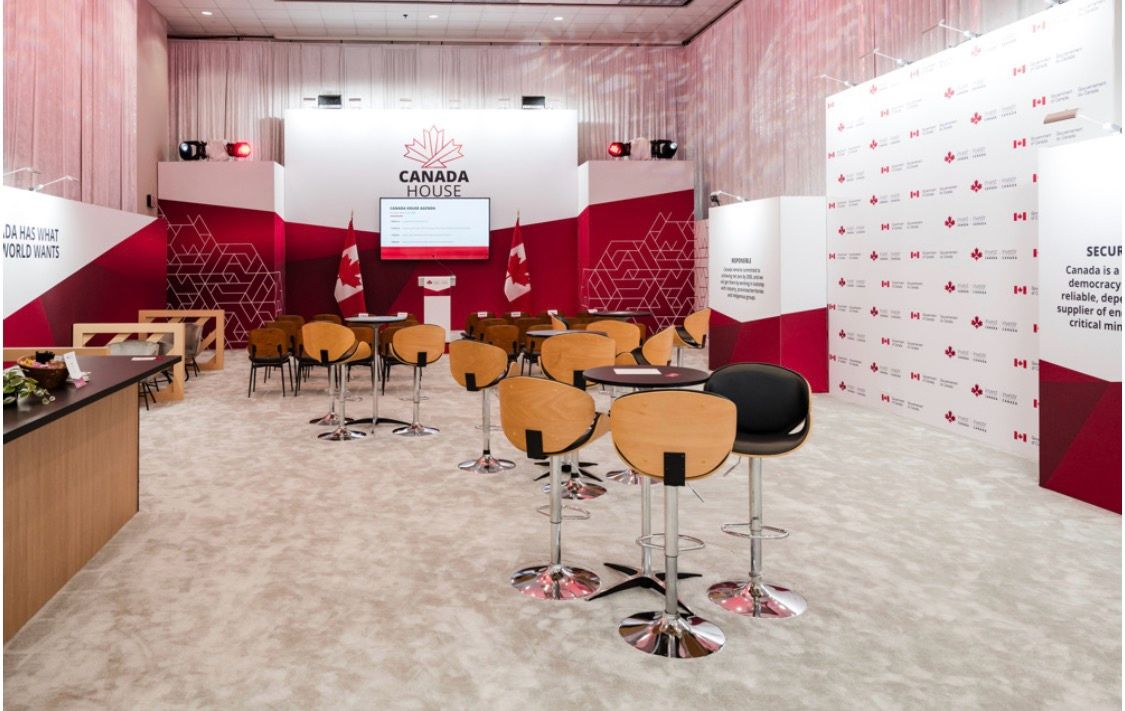
This past week, I attended CERAWeek as part of the Canadian Government delegation that planned and delivered the Government of Canada’s presence at the conference. This was my third time at CERAWeek, and I led the planning of Canada’s programming at Canada House in the Innovation Agora.
Our overarching message was simple and consistent: “Canada has what the world wants.” Specifically, Canada offers energy resources that are abundant, competitive, responsible, and secure. This message aligns closely with the Government of Canada’s efforts to diversify trade—particularly energy exports—while attracting investment into Canadian energy projects to enable that export growth. These efforts are increasingly important as Canada navigates a more complex geopolitical landscape as a middle-power country.
That message clearly resonated. Its impact was strengthened by an unusual level of alignment between the federal government and the Government of Alberta—something we have not seen in some time—and this alignment was reflected in several public responses (see here, here and here).
“This year, CERAWeek feels a bit like the Canada show.”
~ John Stackhouse, Royal Bank of Canada
What we could not have anticipated was that our presence would coincide with the onset of the next oil and energy shock. The war in Iran, damage to Qatari LNG export facilities—which undermined expectations of a short-term LNG glut—and the closure of the Strait of Hormuz dramatically altered the context in which our message landed. These events injected a new tone and urgency into conversations, reinforcing the need for Canada to build energy infrastructure “at a speed and scale not seen in generations,” to quote Prime Minister Carney.
As a result, opportunity became the defining word at CERAWeek. The opportunity lies in how this crisis—combined with the United States’ role in contributing to a rupture in the international order that has eroded trust in its reliability as a partner—positions Canada uniquely well over the medium term. As a clean and conventional energy superpower, Canada can serve as an anchor in the global energy system. The vision of delivering abundant, competitive, responsible, and secure energy molecules from all three coasts has never been more welcome, particularly as expectations (and in some cases hype) around energy demand growth from AI data centres are layered onto the crisis.
At the same time, there was a critical conversation that deserved more attention but largely did not happen: clean energy and the energy transition. While CERAWeek is valuable for gauging industry sentiment, it can also function as an echo chamber—especially when C-suite executives and the government officials they engage with are repeatedly asked how to secure supply in the face of an immediate crisis. With that context in mind, the following are my key takeaways, informed not only by CERAWeek but also by broader reflections on how Canada should approach its energy future.
Energy security is paramount
Within the energy trilemma, energy security has emerged as the most urgent concern globally. Energy affordability (or equity) remains important, but it now clearly ranks behind the basic requirement of keeping the lights on. Environmental sustainability—once front and centre in the pre-pandemic, Paris Agreement era—has receded significantly.
The war in Iran and its implications for oil supply are creating intense short- and medium-term pressure on the global energy system. These pressures are already driving decisions that could undermine emissions-reduction efforts, including a return to coal-fired electricity and renewed discussions in Europe about gas development in the North Sea and potentially onshore. Even if the conflict were to end immediately and the Strait of Hormuz reopened, supply-chain disruptions would continue to ripple through the system, much as they did during the pandemic.
Electrostate versus petrostate
A bipolar global order is emerging—if it has not already arrived—led by China and the United States. Unlike the Cold War, this order is defined less by military power and more by economic power, underpinned by two fundamentally different energy system visions: the electrostate and the petrostate.
As articulated by Dr. Tatiana Mitrova and Anne-Sophie Corbeau of Columbia University’s Center on Global Energy Policy, “fossil fuels may be the old instruments of power, while electrons and critical minerals are the new.” China is firmly pursuing the electrostate path, manufacturing renewable energy technologies and electric vehicles at a pace and scale that would have seemed unimaginable a decade ago. By contrast, the United States, under the current administration, is doubling down on fossil fuels, arguing that hydrocarbons are essential to provide baseload backup when variable renewables are unavailable.
Electric is no longer “climate” technology, but “energy security” technology
Thanks to dramatic cost reductions driven largely by China’s industrial policy, electricity technologies have entered what James Gutman describes as the “New Joule Order,” in which securing electrons becomes central to energy security.
President Trump’s first year in office has destabilized global trade through on-again, off-again, on-again tariffs, damaged the United States’ credibility as a reliable international partner, and culminated in a war that has triggered another energy shock. In this context, electrons increasingly outperform molecules as the foundation of energy security—and energy security is now inseparable from national security.
In 2025, many at CERAWeek pointed to Africa as the next major source of growth in demand for energy molecules, driven by economic and population growth. Today, China is aggressively expanding renewable energy exports to the continent, including announcing zero-tariff access for all but one African nation. Evidence of large-scale solar deployment is already emerging, alongside the development of regional power interconnection systems in Africa and ASEAN. These systems enable greater deployment for renewables and a more diversified and resilient electricity mix in a way that the balkanized electricity grids of the United States and Canada struggle to replicate.
This crisis will only accelerate the global shift toward electrification. Many countries are reluctant to deepen their dependence on hydrocarbon supply chains that have repeatedly proven unreliable. A recent study by the think tank Ember illustrates how India is pursuing an “electrotech fast-track,” allowing it to bypass the fossil-fuel-dependent development path taken by the West—and, to some extent, China. This experience is likely to shape alternative energy development pathways for other countries as well.
For Canada, all of this raises fundamental questions about how we define and pursue our ambition to be an energy superpower. Conventional energy is in high demand today, but it will not remain so indefinitely. The more important question is how Canada positions itself for success in a bipolar global economy and energy system—leveraging its legacy strength in energy molecules while preparing for a future that will increasingly be defined by electrons.